


Why Is My Tent Wet Inside? The Most Common Camping Problem Explained
You wake up early in the morning after a great night of camping.
The sun is just starting to rise. Birds are singing. Everything seems perfect—until you touch the inside wall of your tent.
It’s wet.
Your first thought is usually:
“Did my tent leak?”
The surprising answer is that most of the time, the tent isn’t leaking at all.
In fact, one of the biggest frustrations campers experience is often caused by something completely natural: condensation.
Let’s look at why your tent gets wet inside and how you can prevent it on future camping trips.
The Real Reason Your Tent Is Wet Inside
Most campers assume water inside the tent means rain got through the fabric.
However, condensation is often the real culprit.
Every time you breathe, your body releases moisture into the air.
During the night, campers also generate moisture through:
✔ Breathing
✔ Sweating
✔ Wet clothing
✔ Cooking near the tent
✔ Damp gear stored inside
As temperatures drop overnight, that warm moist air meets the cooler tent walls and turns into water droplets.
The result?
A tent that feels wet from the inside even when it hasn’t rained.
Why Condensation Is Worse in Certain Conditions
Some camping environments create the perfect conditions for condensation.
These include:
Cold Nights
The greater the difference between inside and outside temperatures, the more moisture forms.
Camping Near Water
Lakes, rivers, and coastal areas naturally have higher humidity levels.
Many campers notice significantly more condensation when camping near water sources.
Too Little Ventilation
This is one of the most common mistakes.
When campers close every door and vent to stay warm, moisture becomes trapped inside.
Without airflow, condensation quickly builds up.
How to Reduce Condensation
The good news is that condensation can often be minimized.
Experienced campers use a few simple strategies.
Improve Ventilation
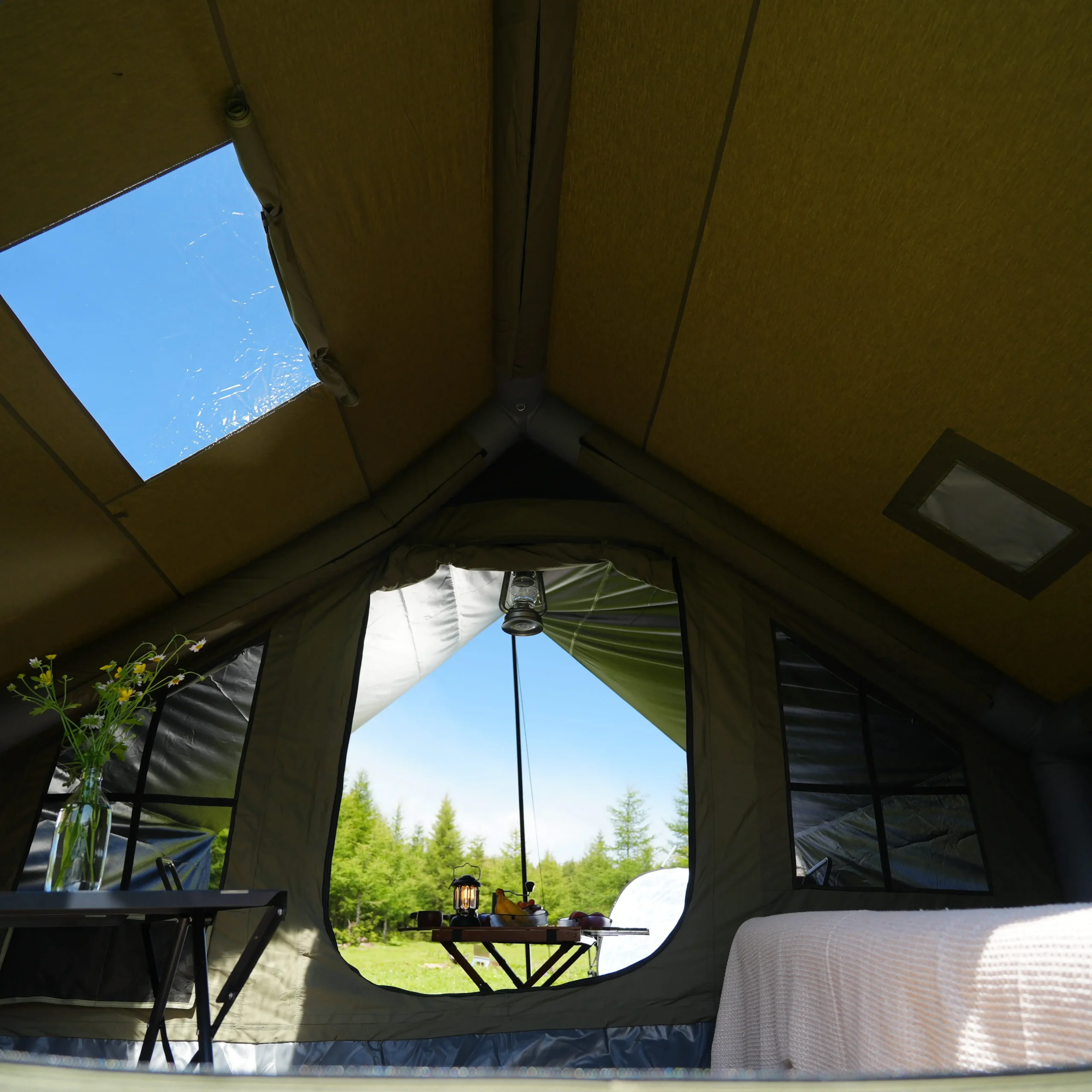
Open roof vents whenever possible.
Even a small amount of airflow can dramatically reduce moisture buildup.
Avoid Drying Wet Gear Inside
Wet jackets, shoes, and towels release large amounts of moisture overnight.
Store wet gear outside the sleeping area whenever possible.
Choose Your Campsite Carefully
Avoid setting up directly beside lakes, rivers, or marshy ground if condensation is a concern.
A slightly elevated campsite often performs much better.
Use a Quality Tent
Modern #camping tents often include advanced ventilation systems designed specifically to combat condensation.
Premium #inflatable tents typically feature larger vents and better airflow than many traditional tent designs.
Is Condensation Worse in Inflatable Tents?
Not necessarily.
Many people assume inflatable tents trap more moisture because of their larger interiors.
In reality, many high-quality air tents offer excellent ventilation systems.
Large mesh panels, roof vents, and spacious layouts often help improve airflow and reduce condensation.
The key factor isn’t whether the tent uses poles or air beams—it’s ventilation.
How to Tell the Difference Between Condensation and a Leak
Here’s a simple test.
Condensation usually appears:
✔ Across large sections of the interior
✔ On ceilings and walls
✔ After cold nights
✔ Even without rain
A leak usually appears:
❌ In one specific location
❌ Near seams or zippers
❌ During rainfall
❌ As water actively drips inside
Understanding the difference can save a lot of unnecessary worry.
What Experienced Campers Learn
Almost every camper encounters condensation at some point.
The difference is that experienced campers stop viewing it as a tent problem.
Instead, they treat it as part of camping and manage it with:
✔ Better ventilation
✔ Smarter campsite selection
✔ Dry gear storage
✔ Proper tent setup
Once you understand what’s happening, condensation becomes much easier to control.
Final Thoughts
If you’ve ever asked yourself, “Why is my tent wet inside?”, the answer is usually condensation rather than a faulty tent.
Moisture from breathing, temperature changes, and limited airflow can all contribute to wet tent walls. Fortunately, a few simple camping habits can dramatically reduce condensation and improve your overall camping experience.
Whether you’re using traditional camping shelters or modern #inflatable tents, proper ventilation remains the key to staying dry and comfortable outdoors.
#camping #camping tents #inflatable tents #why is my tent wet inside #tent condensation #air tent #tent store #tent shop #family camping #camping gear #outdoor camping gear #waterproof tent #camping tips #glamping tent